
Arkansas Business | The Business of Belonging: Arkansas Duo Launches Leadership Network for LGBTQ+ Entrepreneurs
April 7, 2026 at 8:34pm
by Chloe McGehee
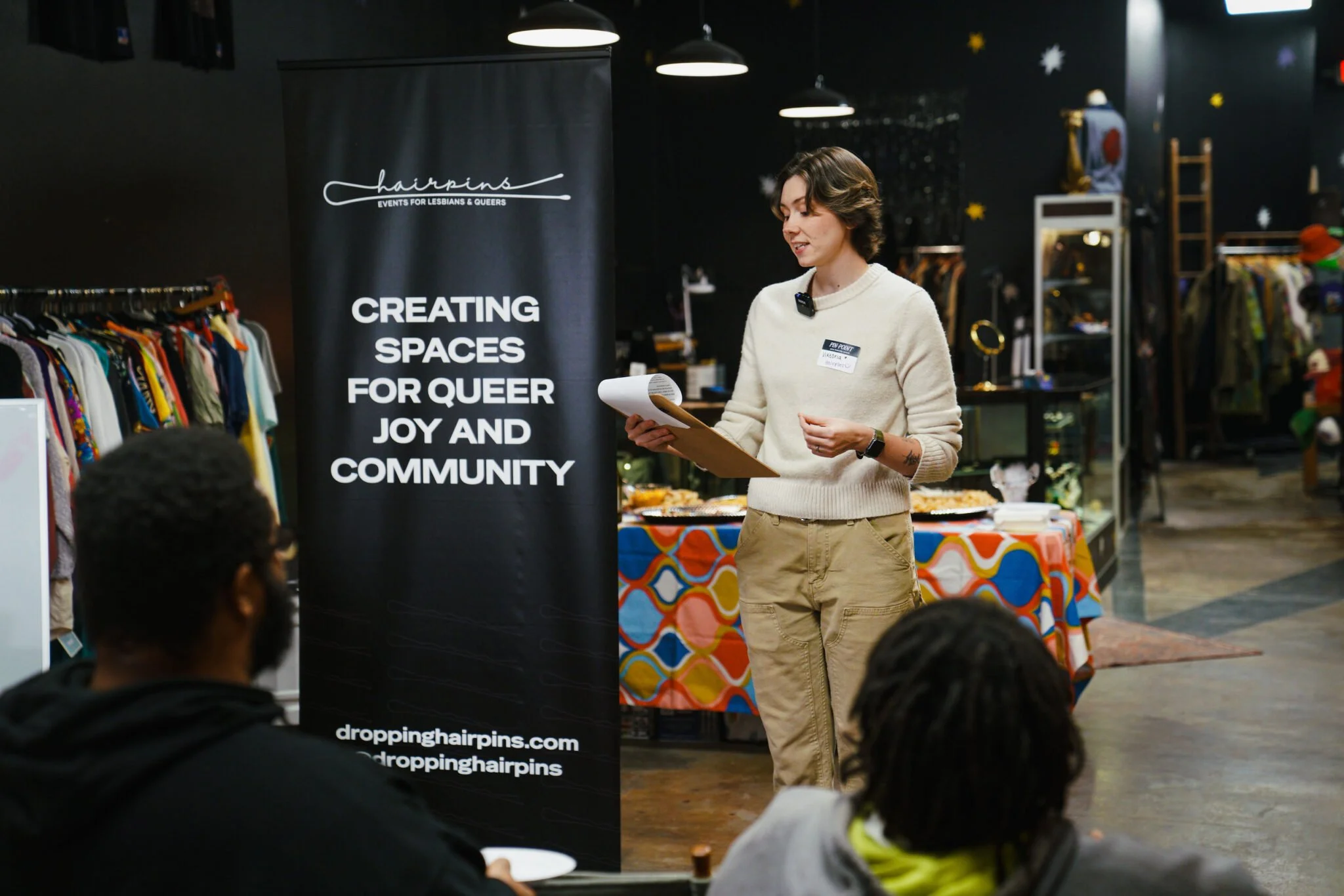
Viktoria Capek is the co-founder and executive director of Hairpins. (Photos courtesy of Hairpins)
Little Rock-based events company Hairpins, which is known for its pop-up gatherings for Arkansas’ LGBTQ+ community, has officially launched a nonprofit arm that combines its popular nightlife events with leadership networks and cultural partnerships across the state.
The Dropping Hairpins Project furthers the mission of Hairpins LLC founders Viktoria Capek and her wife Whitney Butler. Dropping Hairpins launched in January with a focus on community-building through education, advocacy, mutual aid and arts programming — different from the ticketed nightlife events runs by its sister organization.
As part of Dropping Hairpins, the organization launched Pin-Point, a leadership network connecting LGBTQ+ business owners, organizers and community leaders through recurring gatherings. Those events aim to reduce isolation and build shared momentum for those business owners and leaders.
The first Pin-Point event was held in February at Dog Eat Dog, an LGBTQ-owned vintage store in Little Rock’s SoMa neighborhood. Co-owner Tim Croft told Arkansas Business that Pin-Point is a needed program in central Arkansas.
“While there are dozens of prominent and successful queer-owned businesses in Little Rock, it isn’t always easy to feel connected,” Croft said, emphasizing that necessary pathways for successfully running a business don’t always feel compatible with “open queerness.”
“A large part of running a business is networking and being able to establish and maintain relationships with like-minded individuals,” Croft said. “Sometimes the natural associations and relationships that we keep as queer people do not coincide with the types of people who have access to influence, capital or power, and that can put queer business owners at an inherent disadvantage.”
Croft said Dog Eat Dog hopes that Pin-Point can help bridge that gap and bring different stakeholders together.
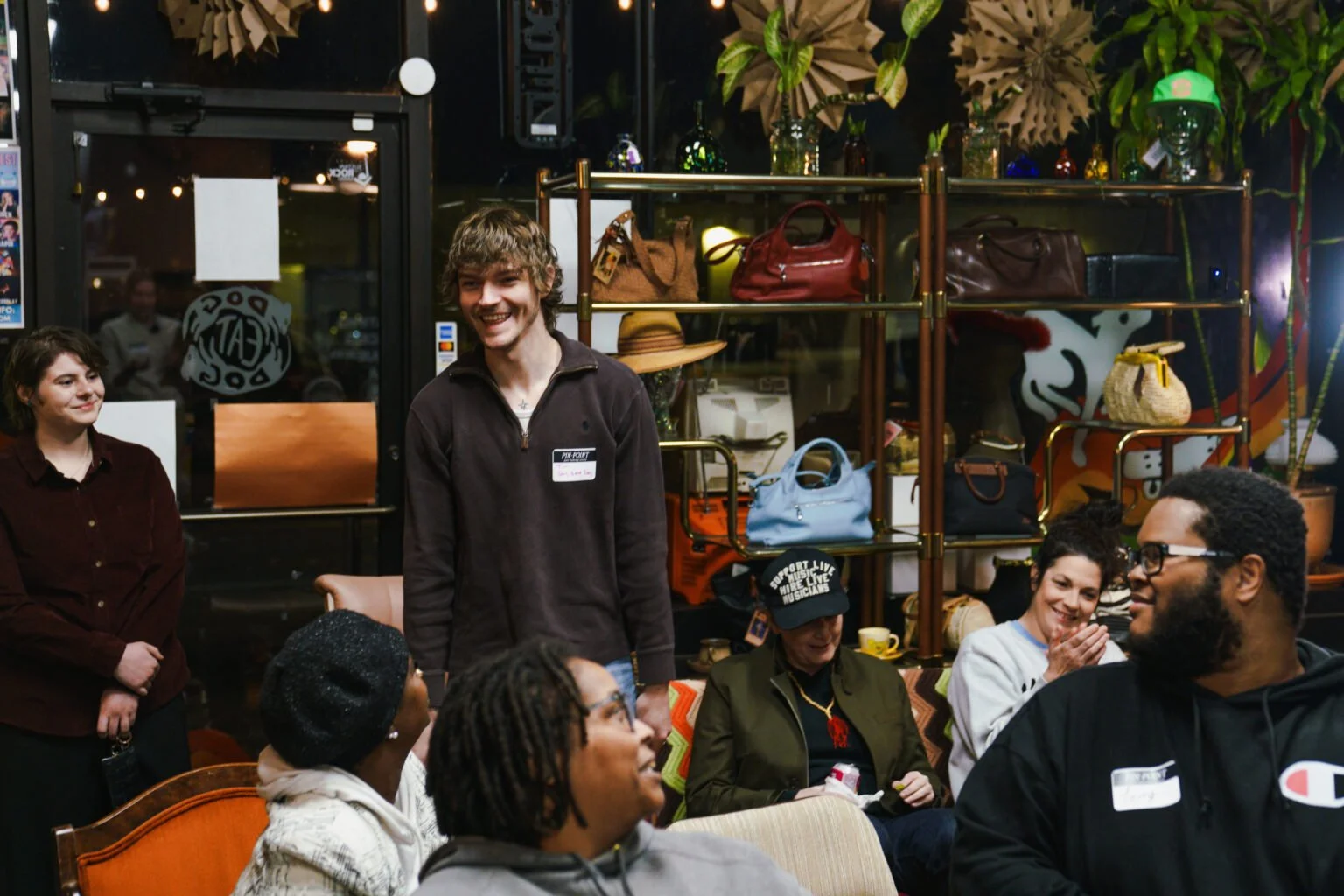
Tim Croft is the co-owner of vintage store Dog Eat Dog in Little Rock (Provided)
Another aspect of Pin-Point is highlighting LGBTQ-owned businesses and their owners.
“Arts-centered neighborhoods like SoMa and Hillcrest could not exist in their current form without queer Arkansans,” Croft said. “Decades of influence from queer people in Little Rock and central Arkansas has helped shape these neighborhoods into the vibrant hubs for entertainment and culture that they are today. For a long time, that influence had to exist in subtle and understated ways, but it was always there.
“Supporting queer-owned businesses helps Little Rock to remain a dynamic and interesting place to live and work,” Croft continued. “It helps Little Rock continue to develop its own unique identity and voice as a small city in the South. And it helps to ensure that everybody knows they are welcome here.”
The nonprofit also hosts business-friendly events for all ages through an initiative dubbed Hairpins Together, partnering with local businesses like Loblolly Creamery, El Sur Street Food Co. and board game café Caverns & Forests, as well as venues like Pettaway Square.
“A big part of that was introducing our audience to these local businesses that were either queer owned or very aligned,” Capek said in an interview. And she said those in the LGBTQ+ community want to support businesses that support them.
“These are beloved community businesses and organizations,” Capek said. “It doesn’t change the integrity of their business just because they come out as loudly supportive of the queer community.”
Nonprofit Needed
Capek said she and Butler knew they needed a nonprofit arm after the success of an educational event held in Little Rock last fall, dubbed Pillow Talk.
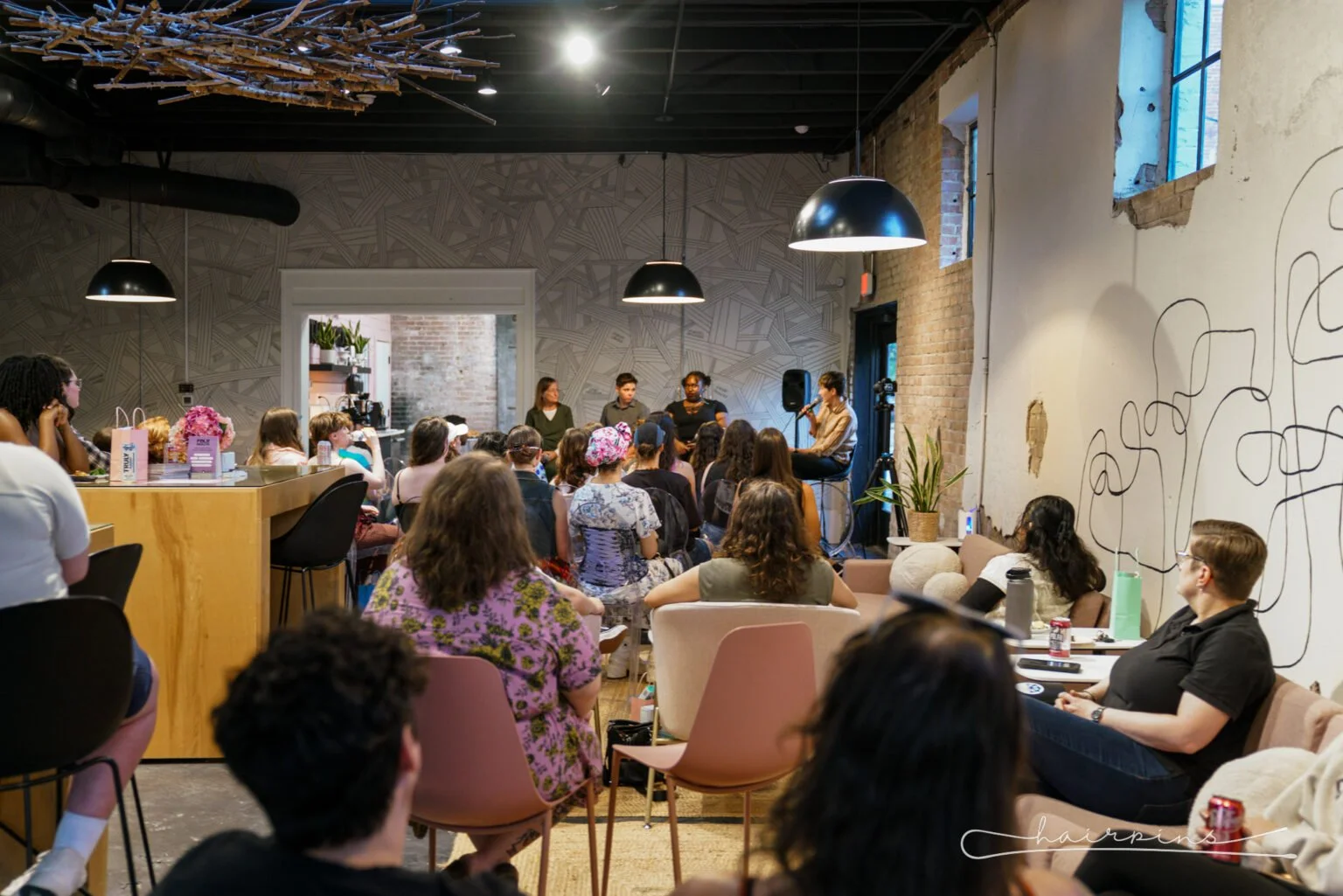
A photo from Hairpins’ Pillow Talk event (Provided)
Pillow Talk was Hairpins’ first educational event, focused on sexual health and safety.
The event, held at The Nest in downtown Little Rock, featured a panel discussion with three sexual health experts and a resource fair of vendors from around the state that focused on mental, physical and sexual health.
Pillow Talk was a free event with more than 100 attendees.
“We saw how much that bonded the community — I don’t want to say more than the nightlife events, because those have been so crucial in letting the community know that it existed here, but this sort of educational event was one of the first times that I feel like people got to be in a room with the queer and gender diverse community here in Arkansas in a way that wasn’t entertainment-focused,” Capek said.
As far as running the nonprofit, Capek and Butler have the professional skills to shape the organization’s marketing-forward approach. Capek has a background in journalism and public relations, and Butler is a graphic designer.
Butler serves as Hairpins’ creative director and president of Dropping Hairpins’ board. The board is composed of Butler; Chacey Schoeppel Wilcox, a law student and former nonprofit executive; Mimi San Pedro, the retired chief strategy officer at The Venture Center; and Ken Parks, an LGBTQ+ advocate.
Hairpins LLC
The nonprofit builds on Hairpins’ nearly two years of community-building in the state.
Motivated by a lack of lesbian bars in Arkansas and across the U.S., Hairpins began in July 2024 with a single ticketed pop-up event at White Water Tavern in Little Rock. Butler and Capek would have been happy with 30 attendees, but more than 200 tickets sold that night, with a 40-minute wait out the door.
Capek, who serves as executive director of both the LLC and nonprofit, said that first night proved there is demand for LGBTQ+ events in the state. “Clearly, this is something people want,” she said.
So the couple continued to host pop-up events at White Water Tavern, and things really picked up in 2025 when Hairpins formally became an LLC. The organization now hosts regular ticketed events that consistently draw more than 200 attendees, with its largest event at Club 27 in Little Rock selling 378 tickets.
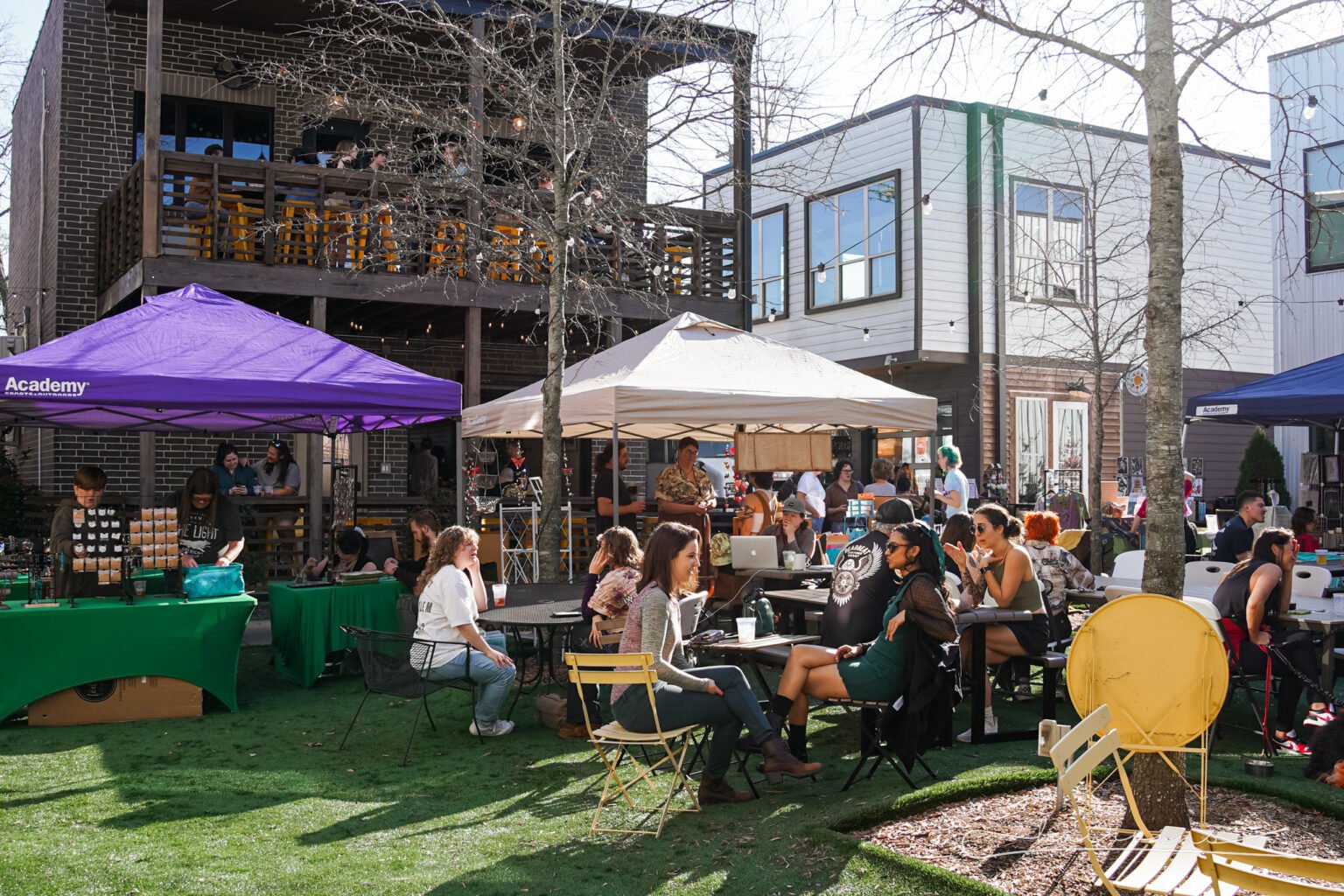
A Hairpins Together event at Pettaway Square in Little Rock (Provided)
Hairpins has also expanded to northwest Arkansas and St. Louis, and has plans for a May 2 event in Austin, Texas. Capek told Arkansas Business that the business recently hired a northwest Arkansas city manager to run programming in the region.
Capek said the city manager role is a sort of “pilot” for her long-term vision of local managers overseeing events in their respective markets in exchange for a 10% share of net ticket profit.
Hairpins focuses on “pop-up parties” and nightlife events for the LGBTQ+ community. Venues typically keep food and bar sales, while Hairpins keeps ticket revenue and pays the vendors. Tickets normally range between $10 and $20, Capek said.
It’s good for the businesses, Capek said, because bar sales are normally quadruple ticket sales.
“There are so many regions that could benefit from a mobile lesbian bar,” Capek said. “When you really start crunching these numbers and think of overhead costs, a brick and mortar is just not something that is economically feasible for a business that is hinged on the LGBTQ+ community, which traditionally has not had access to equitable income in the same way that the hetero community has, and so having events that are low overhead, easily repeatable, in these regions are not only helpful to those communities that need access to these spaces, but it is also extremely low risk.”
Hairpins also hosts monthly happy hour events and an annual “Queer Prom.”
More Programs
Capek and Butler aren’t planning to slow down anytime soon. Dropping Hairpins has a partnership in the works with the Central Arkansas Library System to host a quarterly film series featuring sapphic (the umbrella term for romantic love between women) cinema, followed by discussions. Those events will be held at the Ron Robinson Theater in downtown Little Rock.
Also with CALS, Hairpins is working on archival work to catalog LGBTQ+ stories in the area, “making sure they’re not forgotten and that they’re here for many years to come,” Capek said.
And the nonprofit has also partnered with the Momentary in Bentonville as part of the venue’s ongoing weekly RØDE House Happy Hour series. Hairpins will have community meetups on the second Wednesday of each month during the happy hours.
Other plans include more educational events, one with a focus on the legal aspects of LGBTQ+ relationships and another on how to be an ally to the community.
Dropping Hairpins is seeking funding partners to build the nonprofit’s long-term infrastructure. The organization is looking to raise $20,000 between July and December to support its current programming.
Capek said it is important now more than ever to support the LGBTQ+ community as “diversity cuts” take place.
“Being visible is not enough,” Capek said. “We want to be loudly visible. We want to not just live in Arkansas. We want to thrive, and we want to let people know that we’re not going away because of legislation that is trying to bar us. We still exist. We’re still here, and we’re not going to shy away from the people who don’t want that to be true.”